
Parents Matter More Than They Think: How Family Shapes a Child’s Journey When a child is diagnosed with profound hearing loss, families are pused into a complex world of medical decisions. While securing hearing loss treatment India is a monumental milestone, the surgical procedure is just the beginning. The true transformation happens at home. Child development experts and audiologists agree: when it comes to the lifelong journey of auditory and cognitive development, parents matter more than they think. Here is how the family unit fundamentally shapes a child’s journey with a cochlear implant. Navigating Pediatric Challenges With Cochlear Implant The initial phase of securing an implant is often fraught with emotional and financial stress. However, once the device is activated, a new set of pediatric challenges emerges. The child does not instantly understand speech; instead, they hear a barrage of new, confusing electronic signals. During this overwhelming transition, parents serve as the child’s emotional anchor. By providing a calm, reassuring, and patient environment, parents help their child regulate sensory fatigue. A supportive family dynamic reduces anxiety and encourages the child to wear their external processor consistently, which is the first critical step toward auditory success. Bridging the Gap in Rehabilitation Services Surgery provides access to sound, but the brain must be taught how to listen. This is where parents transition from caregivers to active therapists. While professional guidance is essential, consistent access to cochlear implant rehabilitation services can be difficult, particularly for those outside major metropolitan areas. Because speech therapy after cochlear implant is often uneven, parents must seamlessly integrate Auditory-Verbal Therapy (AVT) techniques into everyday life. ● Narrating the Day: Simply narrating daily routines (e.g., cooking, getting dressed) helps the child map raw sounds to meaningful words. ● Active Listening Games: Encouraging the child to identify environmental sounds, like a doorbell or a dog barking, builds critical auditory processing skills. These daily, repetitive interactions at home are the primary drivers of language acquisition. Driving the Cochlear Implant Success Rate India Children Medical professionals frequently note that the cochlear implant success rate among children is directly correlated with family involvement. The home is the ultimate social and cognitive laboratory. Through continuous, face-to-face conversational “turn-taking,” parents stimulate the neural pathways required for speech. When families prioritize reading together, singing, and responding enthusiastically to a child’s attempts at vocalization, they dramatically accelerate cognitive development and vocabulary retention. Parents are the constant factor that turns clinical therapy into real-world communication. Advocacy in Education and Beyond As the child grows, the parents’ role evolves into advocacy, particularly within the educational system. Integrating a child into mainstream schooling requires navigating the landscape of deaf education technology. Parents must often collaborate closely with teachers to ensure that the classroom environment is optimized for learning and that any necessary assistive devices are utilized effectively. Furthermore, by raising cochlear implant awareness among low income families within their own communities, proactive parents help dismantle stigmas and advocate for more inclusive environments for their children. Conclusion A cochlear implant is an extraordinary piece of medical technology, but it remains just a tool until a family helps bring it to life. In the quiet, everyday moments of talking, playing, and listening, parents lay the neurological and emotional groundwork for their child’s future. You do not need to be a perfect therapist; your consistent, loving presence is the most powerful catalyst in shaping a vibrant, sound-filled journey for your child. Sources https://www.cochlear.com/in/en/home/ongoing-care-and-support/rehabilitation-resources?hl=en-GBhttps://pmc.ncbi.nlm.nih.gov/articles/PMC10117254/?hl=en-GBhttps://www.aussiedeafkids.org.au/about-hearing-loss/cochlear-implants/communication-and-habilitation-cochlear-implants/?hl=en-GB#change-communication-environhttps://blog.curebridge.in/cochlear-implant-surgery-in-india-for-children/?hl=en-GB Author:- Adrija Das
From Diagnosis to Rehabilitation: Why Cochlear Implant Surgery Is Only the Beginning
From Diagnosis to Rehabilitation: Why Cochlear Implant Surgery Is Only the Beginning For many families exploring hearing loss treatment in India, the prospect of a cochlear implant represents a powerful beacon of hope. As a revolutionary piece of medical technology, it can restore the sensation of sound to individuals with severe to profound hearing loss. However, a common misconception is that the surgery itself is a magical switch that instantly restores perfect hearing. The reality is far more complex and demands immense patience. From the initial diagnosis to the lifelong journey of auditory training, the surgical procedure is merely the first major milestone. For many families, this raises crucial questions: what are challenges after cochlear implant in India, and why is the post-operative phase so heavily emphasized by audiologists? The Diagnosis Phase and the Financial Reality The journey begins with a definitive diagnosis of profound hearing impairment. At this stage, families and audiologists face critical decisions regarding affordable healthcare hearing aids vs implants. When powerful hearing aids are deemed insufficient and implants are recommended, a daunting financial reality sets in. Many families are left wondering, why are cochlear implants expensive in India? The high cost of the imported internal receiver and external speech processor, coupled with specialized surgical fees, makes the cochlear implant surgery a significant hurdle. Furthermore, understanding the nuances of insurance coverage cochlear implant India can be frustrating, as many standard insurance policies have historically excluded these life-changing devices. This intense financial burden is a glaring example of healthcare inequality India, where access to transformative medical interventions is too often dictated by socioeconomic status. Navigating Accessibility and Government Support In the case of poor families, surmounting these tough financial barriers needs strong support systems on the part of the public health care service. It is quite natural for parents to pose questions such as, “Can poor children have cochlear implants in India?” and “Is cochlear implant covered by the government in India?”. Luckily, programs such as the ADIP scheme cochlear implant offer essential subsidization of surgeries for poor people who cannot afford them. Knowing who can undergo a cochlear implant in India through special programs is an essential part for parents. Nevertheless, getting into public health care services involves certain barriers of systemic nature. Parents often find themselves dealing with the notoriously long waiting list for cochlear implants in public Indian hospitals. Moreover, cochlear implant in Indian rural vs urban shows great discrepancies. Despite the abundance of centers where advanced cochlear implants are available in metropolitan areas, there is little to no access to health care services related to hearing loss in rural areas. The “Switch-On” and Early Auditory Adapting After weeks from the surgery and once the surgical site heals, the external device can finally be turned on by an audiologist. It is an extremely emotional day for many people, although it does not imply instant understanding of speech. At the early stages of using an implant, the brain gets flooded with signals which can seem like robotic sounds, beeps or static. This is where everything starts. For young patients, especially those in pediatric cochlear implant India, one of the difficulties is to help a child understand the new sensory input without getting tired or frustrated. The Core of the Journey: Rehabilitation and Speech Therapy The final measure of the effectiveness of cochlear implants in India does not only depend on the accuracy of the surgery; it depends significantly on the post-operative treatment’s consistency and effectiveness. The surgery gives the possibility of hearing, while the therapy helps to understand what is heard. Speech Therapy is a Must: Auditory-Verbal Therapy (AVT) is necessary for mapping sounds to words. Alas, it is difficult for people living in rural areas to find professionals providing this service after the cochlear implant India surgery. Although it is easy for urban residents to find professionals providing AVT, it is not easy for the rural population to get proper services for cochlear implant India rehabilitation. Support and Rehabilitation: Effective rehabilitation takes many years and involves an audiologist, speech therapist, and especially parents. The lack of professionals can decrease the effectiveness of cochlear implant India rehabilitation. Education and Integrated Health Care Apart from medical treatment, there is the issue of education and hearing disabilities in India. The moment the child learns how to listen and speak, the next step would be integrating him into the regular school. Education and disability in India show that most of these institutions are unable to provide adequate facilities for children who use assistive technology. The provision of this equipment is important, but the health policy on hearing disability in India should address the whole gamut of care from infancy up to education in school. Failing to do so leaves the family without any rehabilitation and educational help and thus adds to the socio-economic disparity in hearing health care India. Conclusion The Cochlear Implant is a miracle of modern science, but it alone cannot be considered a cure. It is a tool which takes time and tremendous patience along with proper training to make the best use of it. Through increased awareness in India among poor families about Cochlear Implants and making them accessible to complete rehabilitation facilities in the country, every diagnosed person will not only hear, but listen and speak as well. The surgery will only open the doors of hearing; it is the rehabilitation that walks them through. Sources https://adip.depwd.gov.in/https://depwd.gov.in/en/adip/https://depwd.gov.in/en/adip/https://pubmed.ncbi.nlm.nih.gov/38566707/https://pmc.ncbi.nlm.nih.gov/articles/PMC11253238/ Author:- Adrija Das

Deaf Culture and Cochlear Implants: Can Both Coexist?
Deaf Culture and Cochlear Implants: Can Both Coexist? For decades, the intersection of medical advancement and cultural identity has sparked a passionate debate regarding disability in India. On one side of the conversation, cochlear implants are celebrated as a life-changing medical technology in India that restores sound. On the other side, the Deaf community often views these devices with apprehension, fearing the erasure of sign language and Deaf culture. As we explore the landscape of hearing loss treatment in India, a crucial question arises: Must families choose between medical intervention and cultural belonging, or can Deaf culture and cochlear implants successfully coexist? Understanding the Two Perspectives To understand the tension, we must first look at the two differing viewpoints that shape this conversation. The Medical Perspective From a clinical standpoint, profound hearing loss is a physical deficit that can be addressed through early intervention and advanced technology. Audiologists and surgeons emphasize that early implantation maximizes a child’s ability to develop spoken language. However, the heavy focus on medical intervention often overshadows holistic care, especially when families confront steep financial and infrastructural barriers to cochlear implants in India. The Cultural Perspective Conversely, the Deaf community does not view deafness as a disease to be cured. Instead, it is a unique identity with its own rich language (such as Sign Language), art, and social norms. Advocates for disability rights argue that forcing a child exclusively into the hearing world via implants, often while discouraging sign language, can lead to language deprivation and a profound sense of isolation if the implant fails or is removed. Finding the Middle Ground: The Bilingual-Bicultural Approach The belief that one must completely reject Deaf culture to succeed with a cochlear implant is an outdated binary. Today, many forward-thinking audiologists and educators advocate for a bilingual-bicultural approach. This model encourages the use of cochlear implants to access spoken language while simultaneously teaching the child sign language. By integrating deaf education in Indian technology with sign language, children gain the best of both worlds. They are equipped to navigate the hearing world while remaining deeply connected to the Deaf community. This dual approach ensures that if a child experiences device fatigue, they still have a robust, accessible method of communication. The Broader Challenge: Equity and Access While philosophical coexistence is entirely possible, the reality on the ground is complicated by systemic disparities. True coexistence requires an environment where choices are accessible to everyone, which demands robust inclusive healthcare policies. Currently, the debate assumes that all families have the privilege of choice. In reality, socioeconomic inequality in healthcare dictates who gets an implant and who receives post-operative therapy. The vast divide in cochlear implant accessibility in rural and urban areas is a glaring reminder of the broader healthcare challenge developing countries face. Until comprehensive support, including subsidized implants, widespread Auditory-Verbal Therapy, and universal sign language education, is available to all, the ideal of coexistence remains out of reach for many marginalized families. Conclusion Can Deaf culture and cochlear implants coexist? Absolutely. However, achieving this harmony requires a paradigm shift. We must stop viewing cochlear implants as a replacement for Deaf culture and start viewing them as an additional tool in a child’s communication toolbox. By embracing both advanced medical technology and the practices of the Deaf community, we can foster an inclusive society where every child has the opportunity to thrive, connect, and be heard, in whatever language they choose. Sources https://pmc.ncbi.nlm.nih.gov/articles/PMC4237221/?hl=en-GBhttps://pmc.ncbi.nlm.nih.gov/articles/PMC3952677/?hl=en-GBhttps://youtu.be/S2Dqvd1Zk3M?si=ZGoC7Pl3Qcd701XJ Author:- Adrija Das

Cochlear Implants in India: Who Gets Access and Who Gets Left Behind?
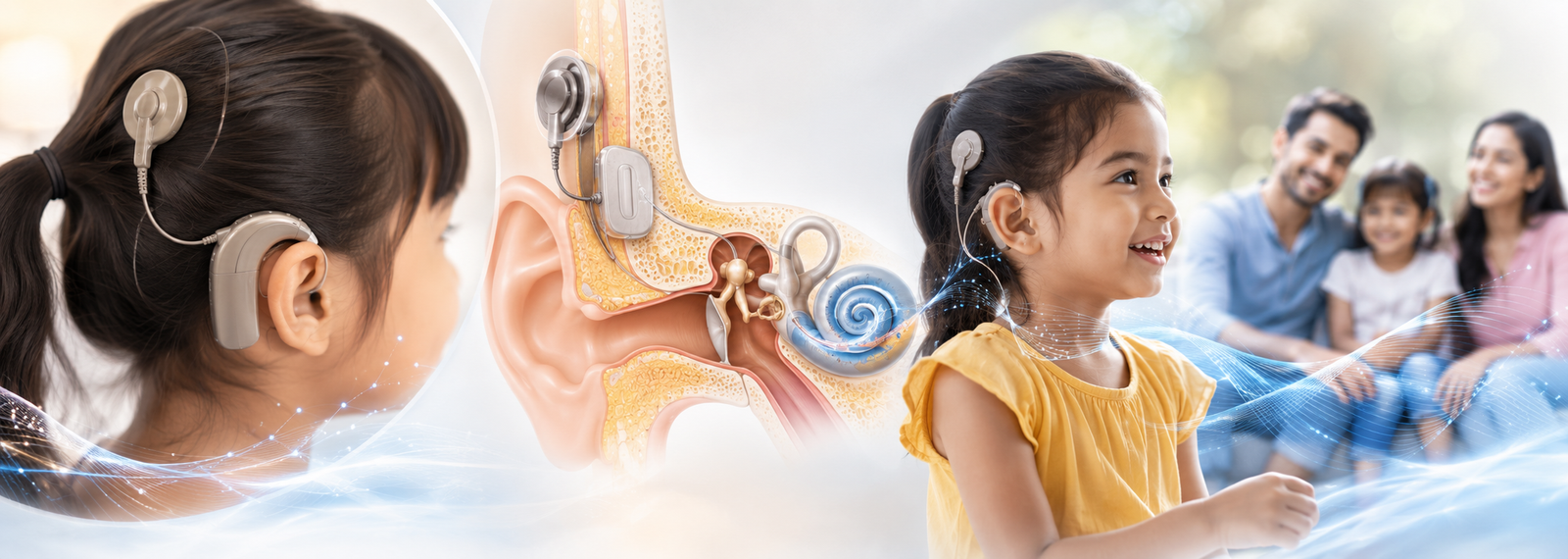
Cochlear Implants in India: Who Gets Access and Who Gets Left Behind? Understanding Healthcare Inequality in India: Addressing healthcare inequality in India remains a profound challenge, particularly for those diagnosed with severe hearing loss. While advanced medical technology in India provides life-changing solutions, the systemic realities of disability in India mean that vital treatments are not universally available. This article examines India’s access to cochlear implants, exploring the barriers marginalized communities face and identifying exactly who cannot access cochlear implants in India. Cochlear Implant Surgery Cost and in India 2026: A cochlear implant is an incredibly sophisticated electronic medical device that bypasses damaged inner ear structures to directly stimulate the auditory nerve, allowing the brain to perceive sound. But this leads to a critical question: why are cochlear implants expensive in India? The exorbitant price tag is primarily driven by the need to import high-end technological components, the specialized surgical expertise required, and the intensive, long-term post-operative care. Currently, the average cochlear implant surgery cost in India typically ranges from ₹5,00,000 to ₹16,00,000, depending on the hospital and the specific brand of the device. For a vast majority of the population, this upfront expense is completely insurmountable without external financial aid. Navigating insurance coverage for a cochlear implant is often a frustrating process, as many standard private health insurance plans offer highly restricted support for congenital conditions or classify these devices as high-end prosthetics not covered under basic plans. Consequently, the socioeconomic inequality in healthcare of India becomes painfully evident, leaving worried parents across the country to wonder: can poor children get cochlear implants in India? Is Cochlear Implant Covered by the Indian Government? To address the high costs of hearing healthcare, the Indian government provides vital financial relief through the ADIP scheme. Yes, cochlear implants are covered, but under strict conditions. Key Eligibility & Subsidy Details: ● Coverage: Fully funds the 100% cost of the implant device, surgery, hospital stay, and 1 year of compulsory post-surgery mapping/therapy. ● Age Limit: Children between 1 and 5 years old (pre-lingually deaf). ● Income Limit: Total family income must not exceed ₹6,00,000 annually (with full benefit up to ₹2,40,000 income, and partial subsidies for slightly higher slabs). ● Requirement: Must hold a valid 40% or higher disability certificate. While the cochlear implant cost in Indian government hospitals is significantly lower than in private clinics, patients often encounter a lengthy cochlear implant waiting list in public hospitals, which can unfortunately delay critical early-intervention surgeries. Cochlear Implant Accessibility India Rural vs Urban: Despite vital government subsidies, physical accessibility remains a massive barrier. Evaluating cochlear implant accessibility rural vs urban reveals a stark contrast. Almost all specialized availability of cochlear implant centres in India is concentrated in Tier-1 metropolitan cities. This rural vs urban healthcare divide means that families in remote or developing regions struggle immensely with rural healthcare hearing loss access. Travel costs, temporary lodging, and the lack of local specialists act as insurmountable barriers to cochlear implants in India. Consequently, geographic isolation continues to intensify overall hearing disability treatment inequality. What Are Challenges After Cochlear Implant in India? Securing the surgery is just the beginning of the journey. The absolute greatest hurdle is sustained rehabilitation. The long-term cochlear implant success rate of children in India relies heavily on continuous auditory-verbal therapy and device mapping. Sadly, speech therapy after cochlear implant access is disproportionately available to wealthier urban households. Without robust cochlear implant rehabilitation services, the expensive device’s potential is largely wasted. Raising proactive cochlear implant awareness in low income families about post-operative care is essential to overcome these critical pediatric cochlear implant challenges. Developing Inclusive Healthcare Policies To effectively combat these sweeping public health issues in India, a multi-faceted approach is mandatory. Increasing government funding for cochlear implants and expanding on-ground assistance from cochlear implant NGOs support are critical next steps. By establishing comprehensive inclusive healthcare policies and improving assistive technology disability distribution, India can close this healthcare gap. Ultimately, prioritizing child healthcare in India and championing disability rights for hearing impairment ensures that life-changing medical interventions become a fundamental right for all, rather than a privilege for the few. Sources https://socialwelfare.vikaspedia.in/viewcontent/social-welfare/differently-abled-welfare/schemes-programmes/adip-scheme?lgn=en&hl=en-GB https://www.acko.com/health-insurance/blogs/coverage-for-cochlear-implants-in-health-insuranc e/?hl=en-GB https://www.pib.gov.in/PressReleaseIframePage.aspx?PRID=1531436&hl=en-GB®=48&lang =2 https://www.apollospectra.com/page/adip?hl=en-GB https://pmc.ncbi.nlm.nih.gov/articles/PMC10982277/?hl=en-GB Author:- Adrija Das